NAMI Medical Resort & Clinic is a residential medical resort in Sopot part of the INVICTA European Family Centre, which combines comprehensive medical services with advanced R&D activities in health and fertility. All programs are residential; no outpatient services are offered.
The resort operates 11 named medical programmes across longevity, fertility, urology, orthopaedics, regeneration, and personalised medicine. Full board meals (breakfast, lunch, smoothie, dinner) are included across all core programmes.
The medical program at NAMI is part of a larger research and development project with patients' consent, anonymous data is collected to study the short-term effects of medical interventions.
At a Glance – NAMI Klinika i Resort Medyczny
|
Field
|
Detail
|
|
Official English Name
|
NAMI Medical Resort & Clinic
|
|
Address
|
ul. Polna 64, 81-740 Sopot, Poland
|
|
Phone
|
+48 (58) 58 58 808 (24h/7 days)
|
|
Reservations Email
|
reservation@nami.invicta.pl
|
|
Medical Department Email
|
medical@nami.invicta.pl
|
|
Institutional Affiliation
|
INVICTA European Family Centre (R&D + comprehensive medical services)
|
|
Programme Model
|
Residential-only all stays are structured medical programs.
|
|
Total Programmes
|
11 named programmes
|
|
LONGEVITY Pricing
|
From 1,145 PLN per person/night (min. 3 nights)
|
|
Stress Reset Pricing
|
From 984 PLN per person/night (min. 3 nights)
|
|
Metabolic Restart Pricing
|
From 1,385 PLN (3 nights) / 1,190 PLN (7 nights) / 1,057 PLN (14 nights)
|
|
Full Board Meals
|
Included across all core programmes (breakfast, lunch, smoothie, dinner)
|
|
HBOT
|
Medical qualification required prior to therapy / 90-minute sessions
|
|
R&D Component
|
Anonymous data collected with patient consent for short-term intervention research
|
|
Daily Services (LONGEVITY)
|
6–9 medical services per day (3–6 individual + 3 group sessions)
|
Sopot’s central location along the Baltic coast allows guests to access the clinic within short travel times from major European business hubs.

High performers choose NAMI Klinika because there are 11 named medical programs. The resort offers a full portfolio of 11 named programs, not 3:
- LONGEVITY
- Stress Reset
- Metabolic Restart
- Ferti Replan
- NAMI OOCYTE
- Uro Woman
- Uro Man
- Orto Medical
- Smart Medical Regeneration
- Libido & Sex
- Personalised Program
Transparent program pricing
- LONGEVITY: from 1,145 PLN per person/night (min. 3 nights)
- Stress Reset: from 984 PLN per person/night (min. 3 nights)
- Metabolic Restart: from 1,385 PLN (3 nights) / 1,190 PLN (7 nights) / 1,057 PLN (14 nights)
Full board meals included: breakfast, lunch, smoothie, and dinner are confirmed inclusions across the LONGEVITY, Stress Reset, and Metabolic Restart programs.
HBOT with medical qualification Every patient undergoes medical qualification prior to HBOT therapy an important clinical safety standard. HBOT sessions last 90 minutes in a multiplace hyperbaric chamber.
R&D research component NAMI's medical programs are part of a larger research and development project. With patients' consent, anonymous data is collected to study the short-term effects of medical interventions. Patients should be aware of this research component before enrollment.
Part of INVICTA European Family Centre NAMI is an integral part of the INVICTA European Family Centre, combining comprehensive medical services with advanced R&D in health and fertility, including a dedicated R&D center.
Clinical Purpose
The clinic focuses on identifying early biological indicators that may signal future health risks. These include markers associated with inflammation, insulin resistance, metabolic dysfunction, and hormonal changes. This is closely linked to immune resilience and inflammation.
Through laboratory testing and physician review, the clinic aims to provide a system-level understanding of health status rather than treating specific symptoms.
This information may help individuals make more informed long-term decisions about nutrition, physical activity, sleep patterns, and stress management.
Who This Clinic Is Designed For
The clinic primarily serves:
- Corporate executives
- Entrepreneurs and founders
- Investors and financial professionals
- Professional athletes
- High-performance individuals seeking structured health evaluation
These individuals often seek medical clarity about long-term health trajectories rather than treatment for immediate illness.
Focus Areas
|
Focus Area
|
What This Means in Practice
|
|
Medical Discipline
|
Preventive medicine and metabolic health
|
|
Core Biological System
|
Metabolism, inflammation, hormonal balance
|
|
Environment & Design
|
Medical facility integrated with physiotherapy and diagnostics
|
|
Program Structure
|
Intensive daily medical schedules
|
|
Lifestyle as Medicine
|
Structured nutrition and activity protocols
|
|
Privacy
|
Adults-only facility with structured scheduling
|
|
Long-Term Strategy
|
Post-visit medical reports and follow-up recommendations
|
The medical philosophy used at NAMI Klinika i Resort Medyczny is grounded in systems medicine, a clinical framework that studies the human body as an interconnected biological network rather than a collection of isolated organs.
Traditional medicine often focuses on diagnosing and treating individual diseases once symptoms appear. Systems medicine takes a broader perspective. Physicians examine how multiple biological systems; such as metabolism, immune response, hormonal signaling, and cardiovascular regulation—interact with one another over time. This integrated approach helps clinicians detect patterns that may signal early physiological changes before disease becomes clinically visible.
At the clinic, medical programs typically begin with comprehensive diagnostic evaluation, including laboratory testing, metabolic analysis, and clinical consultation. These assessments establish a baseline picture of a patient’s biological status. Physicians then interpret these results alongside lifestyle factors such as physical activity, sleep cycles, nutritional habits, and stress exposure.
The goal is not to promise prevention or reversal of aging, but rather to map potential health trajectories using measurable biological indicators. These indicators may include metabolic markers, inflammatory proteins, hormone profiles, and cardiovascular risk indicators. Interpreting these signals allows physicians to identify patterns that may require closer monitoring or lifestyle modification.
This philosophy reflects the principles of Geroscience, a research field investigating how biological aging mechanisms influence the development of chronic diseases such as cardiovascular disease, diabetes, neurodegenerative disorders, and certain cancers. Researchers in this field have proposed that targeting the underlying biological processes associated with aging could influence multiple diseases simultaneously.
For this reason, systems medicine emphasizes early risk identification rather than reactive disease treatment. Diagnostic data are used as a decision-support tool, helping physicians guide individuals toward evidence-informed health strategies while acknowledging the limitations of predictive medicine.
Importantly, the clinic also maintains a cautious stance toward emerging longevity trends. Interventions lacking sufficient clinical evidence or physician oversight are avoided. Instead, the clinical model prioritizes diagnostics, physician interpretation, and structured follow-up recommendations supported by established medical research, aligned with the preventive Medicine 3.0 framework.
Core System Focus
Within the systems-medicine model, the clinic places particular attention on metabolic regulation, inflammatory signaling, and endocrine balance. These biological systems are widely studied because they influence many long-term health outcomes associated with aging.
Metabolic health refers to the body’s ability to regulate energy use, glucose levels, and lipid metabolism. Dysregulation in these processes can contribute to conditions such as insulin resistance, metabolic syndrome, and type 2 diabetes. Research has shown that metabolic dysfunction often develops gradually over many years before symptoms become apparent.
Inflammatory signaling is another key focus area. Chronic low-grade inflammation—sometimes referred to in research literature as inflammaging—has been associated with several age-related conditions including cardiovascular disease and neurodegenerative disorders. Biomarkers such as high-sensitivity C-reactive protein (hs-CRP) are commonly used in clinical research to monitor systemic inflammation.
Hormonal balance also plays an important role in long-term physiological regulation. Changes in endocrine signaling can affect metabolism, bone density, cognitive function, and stress resilience. Monitoring hormone levels provides insight into how these regulatory systems evolve over time.
|
🔍 Did You Know?
Research published in the journal Cell describes aging as a process influenced by several interconnected biological mechanisms—often called the “hallmarks of aging.” These include mitochondrial dysfunction, cellular senescence, genomic instability, and chronic inflammation.
|
Lifestyle as a Medical Tool
In addition to laboratory diagnostics, the clinic recognizes lifestyle behaviors as key variables influencing metabolic health and systemic physiology. Clinical consultations typically review patterns related to nutrition, physical movement, sleep quality, and stress exposure.
Rather than presenting lifestyle guidance as general wellness advice, physicians analyze these factors alongside diagnostic findings. For example, dietary adjustments may be recommended if metabolic testing indicates insulin resistance patterns. Similarly, exercise routines may be modified based on cardiovascular or musculoskeletal assessments.
Sleep regulation is another area frequently evaluated. Circadian rhythms—the body’s internal biological clock—play an important role in hormone regulation, metabolic efficiency, and cognitive performance. Disruptions in circadian rhythms have been linked in research studies to increased risks of metabolic disease and cardiovascular disorders.
Stress physiology is also considered within this framework. Chronic psychological stress can influence hormonal pathways such as cortisol signaling, which may affect immune function, sleep cycles, and metabolic balance.
|
🔍 Did You Know?
Large population studies have shown that even moderate physical activity—around 90 minutes per week—is associated with a measurable reduction in overall mortality risk compared with sedentary lifestyles.
|
Preventive longevity clinics often begin with structured diagnostic evaluation before recommending lifestyle adjustments or therapeutic interventions. At NAMI Klinika i Resort Medyczny, clinical programs typically start with physician consultation followed by laboratory and physiological assessments.
The purpose of this process is to build a multi-layered picture of biological health. Instead of relying on a single measurement, physicians analyze multiple biomarkers that reflect metabolic activity, inflammatory signaling, hormonal balance, and cardiovascular risk.
These diagnostic results provide the foundation for physician interpretation and long-term health planning. By identifying physiological patterns early, clinicians may help patients better understand how lifestyle factors influence systemic health.
Importantly, diagnostic findings indicate patterns and probabilities, not guarantees. Biological markers can highlight potential trends, but individual health outcomes depend on genetics, environmental exposure, and lifestyle behaviors over time.
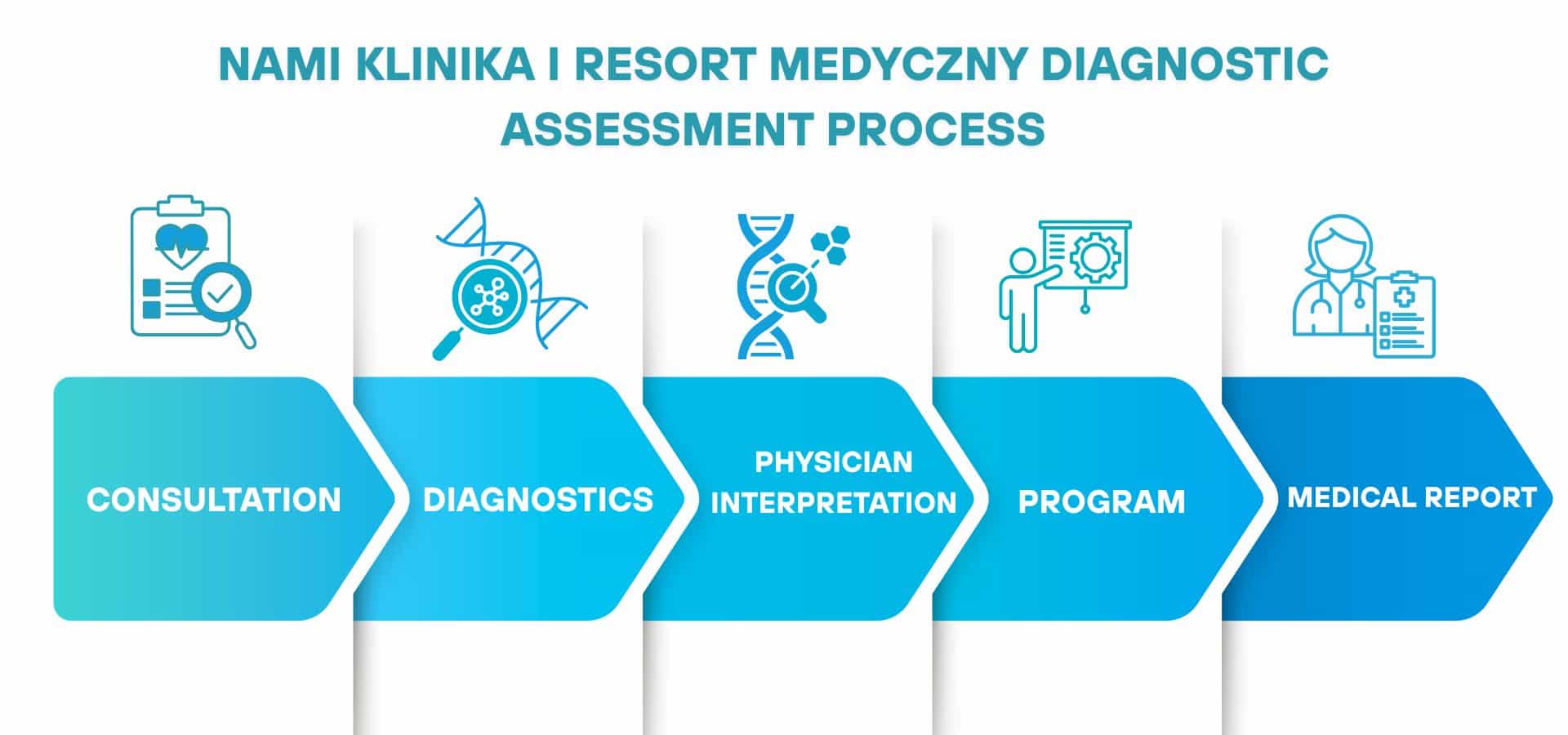
Diagnostic Assessment Includes
Clinical evaluation at the facility may include several layers of medical assessment:
Laboratory Biomarker Testing
Blood analysis may include markers commonly used in preventive medicine research, such as:
- lipid profile indicators
- inflammatory biomarkers including high-sensitivity C-reactive protein (hs-CRP)
- metabolic markers associated with insulin regulation
- hormone panels relevant to endocrine balance
These markers provide insight into cardiovascular risk factors, metabolic efficiency, and systemic inflammation.
Metabolic Health Evaluation
Metabolic testing may examine variables linked to insulin resistance and energy regulation. These indicators help physicians assess how efficiently the body processes glucose and maintains metabolic stability. This is also influenced by muscle and metabolic health.
Genetic Diagnostics
Some programs incorporate genetic testing. These tests analyze inherited variants that may influence metabolism, detoxification pathways, or susceptibility to certain diseases.
Genetic information is not deterministic but can provide context for understanding how different individuals respond to lifestyle factors.
Body Composition & Physiological Assessment
Advanced body composition analysis may evaluate:
- lean muscle mass
- fat distribution
- hydration levels
This information helps physicians understand how physical composition relates to metabolic health.
Cardiovascular Risk Indicators
Clinical evaluation may also review markers associated with cardiovascular health, including blood pressure patterns and lipid metabolism indicators.
Together, these assessments create a multidimensional diagnostic profile that physicians interpret during consultation.
|
🔍 Did You Know?
Researchers studying longevity increasingly use multi-biomarker analysis because single health indicators rarely capture the full complexity of aging biology.
|
Chronomedicine & Future Risk Mapping
An emerging area in preventive medicine is chronomedicine, which examines how biological rhythms influence health.
Human physiology follows circadian cycles that regulate hormone production, metabolism, and sleep patterns. Disruption of these rhythms has been linked in research studies to metabolic disorders, cardiovascular risk, and cognitive decline.
Some longevity clinics analyze sleep patterns, daily activity cycles, and stress exposure alongside laboratory data. This broader analysis helps physicians understand how behavioral patterns interact with biological systems.
By integrating biomarker analysis with lifestyle observations, physicians aim to map possible future health trajectories. These insights may help individuals make informed adjustments to nutrition, sleep schedules, and physical activity routines.
However, predictive medicine remains an evolving field. Biomarkers can highlight potential risks but cannot determine future health outcomes with certainty.
Within the growing field of preventive longevity medicine, the clinic distinguishes itself through several structural strengths related to diagnostics, interdisciplinary care, and specialized medical technologies.
These strengths are not based on marketing claims but on the facility’s integration of laboratory diagnostics, physician-led evaluation, and structured medical programs.
Key Medical Strength 1: One of Poland's Largest Hyperbaric Oxygen Chambers
NAMI Medical Resort & Clinic operates one of Poland's largest hyperbaric oxygen chambers, a specifically named clinical asset. This enables concentrated, high-capacity HBOT sessions within the residential program, supporting oxygen delivery, tissue recovery, and cellular signaling protocols at a scale not available at most longevity facilities in Poland.
|
🔍 Did You Know?
Studies in preventive medicine show that early detection of insulin resistance can identify metabolic risk years before type 2 diabetes develops.
|
Key Medical Strength 2: Oocyte Quality and Fertility-Focused Longevity
A named specialist focus area unique to NAMI Medical Resort & Clinic within the longevity sector Oocyte quality and Fertility-focused longevity. Supported by the INVICTA Group's deep expertise in reproductive medicine, this service addresses the biological intersection of female reproductive ageing and systemic longevity medicine. This is not a general wellness service it is a specialist clinical offering backed by institutional fertility expertise.
Key Medical Strength 3: Residential-Only Medical Programme Model
All stays at NAMI are part of structured residential medical programs, not outpatient appointments. This model ensures that every guest receives a coordinated daily schedule of diagnostics, physician consultations, physiotherapy, and lifestyle assessment within a single clinical environment. The minimum stay for the Longevity programme is 3 nights.
Key Medical Strength 4: Integrated INVICTA Diagnostic Infrastructure
On-site laboratory diagnostics through the INVICTA European Family Centre (INVICTA Group) network enabling blood analysis, genetic testing, and metabolic screening without external laboratory delays.
Key Medical Strength 5: Interdisciplinary Systems Medicine
Internists, cardiologists, endocrinologists, gynecologists, andrologists, physiotherapists, dietitians, and psychologists evaluate diagnostic data collaboratively, providing multi-system interpretation within the residential programme.
Longevity clinics often track changes in health metrics or lifestyle patterns observed during or after structured medical programs. At NAMI Klinika i Resort Medyczny, reported outcomes are typically described through patient feedback, internal program summaries, and physician observations.
These examples should be interpreted as individual experiences, not clinical guarantees. Diagnostic findings can reveal patterns in metabolism, inflammation, or lifestyle habits, but long-term outcomes depend on many variables including genetics, environment, and ongoing behavior after the program.
For executives and high-performance individuals, the value of these programs often lies in clarity and structured health insight, rather than immediate medical results.
Outcome 1 – Improved Sleep Regularity and Recovery
Before:
Some guests report disrupted sleep cycles, difficulty maintaining consistent sleep routines, or persistent fatigue related to demanding professional schedules and frequent travel.
After:
Following medical consultations and lifestyle evaluation, some participants report improved sleep consistency and better recovery routines. These changes may occur after adjustments to sleep hygiene, stress management techniques, and daily activity rhythms recommended by clinicians.
Source:
Guest feedback summarized in clinic publications and review platforms.
Outcome 2 – Increased Energy and Daily Performance
Before:
Executives and professionals sometimes arrive reporting decreased daytime energy or irregular metabolic patterns associated with prolonged stress, travel schedules, or sedentary work environments.
After:
After diagnostic assessment and structured lifestyle recommendations, some individuals report improved daily energy levels and better awareness of nutrition and activity habits.
Source:
Patient testimonials and clinical program summaries.
Outcome 3 – Reduction in Chronic Musculoskeletal Discomfort
Before:
Persistent musculoskeletal discomfort, particularly in the neck, lower back, or shoulders, is commonly reported among individuals with sedentary work patterns or intensive physical training schedules.
After:
Following physiotherapy sessions and movement assessments, some guests report improved mobility and reduced discomfort. These outcomes may reflect the effects of targeted physical therapy, posture correction, and guided movement programs.
Source:
Patient feedback referenced in clinic reviews and internal program reports.
|
⚠️ Editorial Note
These examples reflect individual experiences reported by guests. Outcomes vary widely depending on medical history, lifestyle factors, and underlying conditions. Diagnostic evaluations identify risk patterns and physiological indicators, not guaranteed outcomes. All health decisions should be made in consultation with qualified medical professionals.
|
All programs are residential. Full board meals are included in all core programs.
LONGEVITY Programme
From 1,145 PLN per person/night Minimum 3 nights 6–9 medical services per day (3–6 individual + 3 group sessions daily)
Confirmed inclusions:
- 3 specialist consultations upon arrival
- Laboratory diagnostics package (CBC, lipid panel, HOMA-IR, hs-CRP)
- 3–6 individual treatments daily (including Cryotherapy Chamber with Cardio Training, Acupuncture, HBOT with prior medical qualification, Radial/Focused Shockwave Therapy)
- 3 group sessions daily
- Body composition analysis with biological age assessment
- 1 follow-up consultation after stay
- In-room aromatherapy
- Unlimited access to regeneration and sports zone
- Free parking
- Full board meals (FB breakfast, lunch, smoothie, dinner)
- Dietitian care
- Take-home recommendations
- Pre-arrival consultation
HBOT note: Medical qualification required prior to therapy. Sessions: 90 minutes in a multiplace hyperbaric chamber.
R&D note: With patient consent, anonymous data collected for short-term intervention research.
Stress Reset Programme
From 984 PLN per person/night From 3 nights (open-ended, no upper cap)
Confirmed inclusions:
- 3 specialist consultations upon arrival
- 3–4 individual treatments daily (including Cryotherapy Chamber with cardio training and acupuncture)
- 3 group sessions daily (yoga, breathing techniques, medical training, Schultz autogenic training)
- Lab tests (CBC, lipid panel, HOMA-IR, hs-CRP)
- Body composition analysis
- 1 follow-up consultation
- Dietitian care
- Full board meals (FB breakfast, lunch, smoothie, dinner)
- In-room aromatherapy
- Unlimited access to regeneration zone
Metabolic Restart Programme
Tiered pricing with three fixed durations:
- 3 nights: from 1,385 PLN per person/night
- 7 nights: from 1,190 PLN per person/night
- 14 nights: from 1,057 PLN per person/night
Confirmed inclusions:
- Consultation with metabolic physician
- Consultation with dietitian
- Consultation with medical trainer
- Consultation with psychologist
- Cryochamber
- Shockwave therapy
- Endermology
- Pneumatic massage
- 3 group activities daily (medical yoga, medical training, Yoga Nidra)
- Full board meals
- Body composition analysis
- Follow-up consultations
- Optional HBOT add-on (medical qualification required prior)

NAMI Medical Resort & Clinic combines clinical-grade medical therapies with a residential resort environment delivering structured daily treatment schedules across individual sessions, group activities, and specialist consultations. All therapeutic services are delivered within a residential medical framework under multidisciplinary clinical oversight, with full board meals, aromatherapy, and regeneration zone access included as standard across core programs.
Individual Treatments (Available in LONGEVITY and Stress Reset)
- Cryotherapy Chamber with Cardio Training named included individual treatment
- Acupuncture named available individual treatment
- Hyperbaric Oxygen Therapy (HBOT): 90-minute sessions in multiplace hyperbaric chamber; medical qualification required prior to every session
- Radial Shockwave Therapy (RSWT)
- Focused Shockwave Therapy (FSWT)
- Shockwave Therapy for Sexual Function Improvement
- Endermology
- Pneumatic massage
Group Sessions (Daily LONGEVITY and Stress Reset)
- Yoga
- Breathing techniques
- Medical training
- Schultz autogenic training
- Medical yoga (Metabolic Restart)
- Yoga Nidra (Metabolic Restart)
Therapeutic Technologies
HIFEM Electromagnetic Stimulation of Pelvic Floor Muscles: HIFEM at NAMI am categorized as a therapeutic treatment Electromagnetic stimulation of the pelvic floor muscles is not a diagnostic tool.
HBOT Clinical-Grade Hyperbaric Oxygen Therapy
- Multiplace hyperbaric chamber
- 90-minute sessions
Cryotherapy Chamber with Cardio Training is named and included as individual treatment in LONGEVITY and Stress Reset programs.
Shockwave Therapies: Three named variants available:
- Radial Shockwave Therapy (RSWT)
- Focused Shockwave Therapy (FSWT)
- Shockwave Therapy for Sexual Function Improvement
Facilities
- Regeneration and sports zone (unlimited access included)
- In-room aromatherapy (included)
- Free parking (included)
- Full board dining (included breakfast, lunch, smoothie, dinner)
LONGEVITY and Stress Reset programs:
- Physiotherapists (on-site)
- Dietitians (on-site)
Metabolic Restart Program:
- Metabolic physician
- Clinical dietitian
- Physiotherapist
- Psychologist
Research & Development Component
NAMI Medical Resort & Clinic operates as part of a larger research and development project within the INVICTA European Family Centre.
What this means for guests:
- With patients' explicit consent, anonymous data is collected during stays
- This data is used to study the short-term effects of medical interventions
- Participation in data collection is consent-based, not mandatory
- NAMI is part of INVICTA's broader R&D activities alongside comprehensive clinical services
Guests should be informed of this research component before program enrollment. Full details are provided in program documentation.
Longevity programs typically vary depending on diagnostic depth and program duration. Pricing structures are usually determined by the number of consultations, diagnostic tests, and medical sessions included in the program.
As with many preventive health programs, costs are influenced by the level of diagnostic evaluation and physician involvement.
Pricing
|
Programme
|
Duration
|
Price (per person/night)
|
|
LONGEVITY
|
Minimum 3 nights
|
From 1,145 PLN
|
|
Stress Reset
|
From 3 nights (open-ended)
|
From 984 PLN
|
|
Metabolic Restart
|
3 nights
|
From 1,385 PLN
|
|
Metabolic Restart
|
7 nights
|
From 1,190 PLN
|
|
Metabolic Restart
|
14 nights
|
From 1,057 PLN
|
What's Included in Pricing
Full board meals (breakfast, lunch, smoothie, and dinner), in-room aromatherapy, unlimited regeneration/sports zone access, free parking, dietitian care, follow-up consultation, and take-home recommendations are confirmed inclusions in LONGEVITY, Stress Reset, and Metabolic Restart.
Pricing Notes
|
Category
|
Details
|
|
Pricing Model
|
Per person per night residential stays only
|
|
Entry Point
|
Stress Reset from 984 PLN per person/night
|
|
LONGEVITY Entry
|
1,145 PLN per person/night (min. 3 nights)
|
|
Metabolic Restart
|
Tiered 3/7/14 nights with decreasing nightly rate
|
|
Contact
|
reservation@nami.invicta.pl / +48 (58) 58 58 808
|
How Programs Are Structured
Programs typically follow a structured sequence:
Pre-Visit Preparation
Before arrival, guests may complete a medical history questionnaire and participate in a virtual consultation to discuss health goals.
On-Site Diagnostics
Upon arrival, physicians conduct diagnostic testing and laboratory analysis. This stage provides baseline health data for evaluation.
Physician Interpretation
Doctors review diagnostic findings and discuss the results with the patient during consultation sessions.
Medical Reporting
At the conclusion of the program, guests receive a structured medical summary outlining observations and recommendations for long-term health management.
Length of Stay
The length of stay depends on program type and diagnostic complexity.
Typical stays include:
- 3 nights: short diagnostic programs
- 5 nights: expanded metabolic or stress-related evaluation
- 7 nights: comprehensive longevity programs with multiple clinical assessments
Some guests combine these visits with professional travel in Europe, scheduling medical programs between business commitments.
Clinic: NAMI Medical Resort & Clinic Address: ul. Polna 64, 81-740 Sopot, Poland
Phone: +48 (58) 585 8808 (24 h/7 days)
Reservations: reservation@nami.invicta.pl
Medical Department: medical@nami.invicta.pl Institutional
Affiliation: INVICTA European Family Centre
NAMI Medical Resort & Clinic operates exclusively as a residential medical facility. All stays are structured medical program stays; no outpatient appointments or day visits are available.
Recommended Length of Stay
Most guests participate in programs lasting three to seven nights, depending on the depth of diagnostics and medical consultations required.
Shorter stays are typically designed for focused diagnostic evaluation, while longer programs may include additional consultations and physiotherapy sessions.
How to Reach the Clinic
Nearest Airport:
Gdańsk Lech Wałęsa Airport (GDN)
Typical Transfer Time:
Approximately 25–30 minutes by car
Transport Options
Visitors can reach the clinic through several transportation options:
- airport taxi or private transfer
- car rental services
- regional train connections to Sopot station
🔗 Find best flights to Sopot
🔗 Find car rentals in Sopot
Links are provided for travel planning convenience only.
Accommodation & Stay Planning
The clinic operates as a residential medical facility, allowing guests to stay on-site during structured programs.
However, some visitors may choose to stay in nearby hotels or serviced apartments depending on their travel schedule.
🔗 Explore nearby hotels & apartments
What to Bring
Guests participating in clinical programs are typically advised to bring:
- medical documentation or recent laboratory results if available
- comfortable clothing suitable for movement or physiotherapy sessions
- personal health records that may help physicians review medical history
Additional preparation instructions are usually provided by the clinic prior to arrival.
Preventive longevity clinics are often evaluated through a combination of patient feedback, professional recognition, and clinical program structure. At NAMI Klinika i Resort Medyczny, publicly available feedback from guests highlights experiences related to medical consultation quality, facility infrastructure, and the structured nature of clinical programs.
While these reports provide useful insight into patient experience, they should not be interpreted as medical outcomes. Longevity medicine focuses primarily on diagnostic clarity and risk awareness, rather than guaranteed changes in health status.
Many guests visit the clinic seeking structured evaluation of metabolic, hormonal, and lifestyle factors. For executives and high-performance individuals, the perceived value often lies in gaining a clearer understanding of biological health indicators within a short period of time.
What Patients Commonly Report
Across multiple review platforms and testimonials, several recurring themes appear in guest feedback:
Structured Medical Evaluation
Patients frequently mention the clarity provided by physician consultations and diagnostic assessments. Many report that receiving structured explanations of laboratory findings helped them better understand their health indicators.
Interdisciplinary Medical Team
Guests often highlight the collaborative nature of the clinical team, which may include physicians, physiotherapists, dietitians, and other specialists working together to review diagnostic data.
Facility Infrastructure
Reviews commonly reference the clinic’s medical equipment and infrastructure, including physiotherapy facilities and the hyperbaric oxygen therapy chamber.
Quiet Clinical Environment
Because the facility operates under an adults-only policy, many guests describe the environment as calm and suitable for recovery and consultation.
Media & Professional Recognition
Preventive longevity clinics such as NAMI are part of a growing global sector focused on proactive health evaluation.
Medical tourism publications and longevity research discussions frequently highlight the increasing role of diagnostics-driven health programs designed to identify potential risk patterns before disease develops.
The clinic’s association with the INVICTA medical network, known for its diagnostic laboratories and reproductive medicine expertise, contributes to its position within this emerging healthcare segment.
Preventive longevity clinics in Europe represent an evolving intersection between traditional healthcare and proactive health monitoring. Facilities such as NAMI Klinika i Resort Medyczny operate within this growing sector by combining diagnostic evaluation, physician consultation, and lifestyle assessment within structured residential programs.
For executives and high-performance individuals, the appeal of such clinics often lies in time efficiency and diagnostic clarity. Rather than navigating multiple medical appointments across different providers, patients can undergo coordinated evaluation within a single location. It reflects broader trends seen across longevity clinics in Europe.
However, the field of longevity medicine remains under active scientific investigation. Many biomarkers associated with biological aging are still being studied, and predictive models of future health risk continue to evolve. Diagnostic indicators may reveal patterns that warrant attention, but they do not provide certainty regarding long-term outcomes.
For decision-makers evaluating longevity clinics, important considerations typically include diagnostic depth, physician expertise, clinical infrastructure, and the quality of medical interpretation provided during consultation.
In this context, clinics that emphasize structured diagnostics and physician-led evaluation may offer valuable insight into personal health trajectories, while acknowledging the broader scientific uncertainties that remain within the field of aging research.
Is NAMI Klinika i Resort Medyczny a medical clinic or a wellness retreat?
The facility operates as a registered medical clinic rather than a spa or wellness retreat. Programs typically begin with diagnostic testing and physician consultation before lifestyle recommendations are discussed.
Who typically visits longevity clinics like this one?
Guests often include executives, entrepreneurs, investors, professional athletes, and individuals seeking structured evaluation of long-term health risks.
Are medical programs personalized?
Programs are generally tailored based on diagnostic results and physician consultation. Laboratory findings and lifestyle factors are reviewed before recommendations are provided.
How is patient privacy handled?
Medical consultations and diagnostic data are handled under healthcare confidentiality standards. Clinical scheduling and the adults-only policy also help maintain a quiet and private environment.
Can individuals with chronic medical conditions participate?
Individuals with existing medical conditions should consult their personal physician before participating in longevity programs. Clinics typically review medical history prior to program enrollment.
Is internet connectivity available during the stay?
Facilities typically provide internet connectivity, allowing guests to remain in contact with professional obligations while attending medical consultations and assessments.
How should executives evaluate the value of such programs?
Executives often assess these programs based on diagnostic depth, physician expertise, and the clarity of medical interpretation provided. The value typically lies in gaining structured insight into health indicators rather than expecting immediate medical outcomes.
A Strategic Pause That Protects the Years Ahead
For individuals responsible for leading companies, managing investments, or performing at elite athletic levels, health decisions are often postponed until symptoms demand attention. Preventive longevity clinics offer an alternative approach by creating a dedicated space to examine biological health before problems become clinically apparent.
Programs at facilities such as NAMI Klinika i Resort Medyczny are designed to concentrate diagnostic evaluation, physician consultation, and lifestyle assessment within a structured timeframe. For many executives, the appeal lies not in promises of dramatic change but in gaining a clearer understanding of how their body is functioning today.
Modern longevity medicine operates at the intersection of diagnostics, behavioral science, and preventive care. Laboratory markers, metabolic indicators, and lifestyle patterns can provide valuable signals about potential health trajectories. When interpreted by experienced physicians, these signals may help individuals make informed decisions about nutrition, movement, sleep, and stress management. This includes deep sleep and recovery patterns as part of long-term health optimisation.
At the same time, longevity science remains a developing field. No diagnostic test can fully predict the future, and no program can replace ongoing medical care provided by personal physicians.
For executives and high-performance individuals, a structured medical evaluation can serve as a strategic pause—an opportunity to step back from daily demands and examine the biological systems that ultimately support long-term performance and wellbeing.
👉 View Longevity Program
↩ Return to ExtendMy.Life
↑ Back to Top
Disclaimer
The information presented on this page is provided for informational and editorial purposes only. It is intended to offer a structured overview of a medical facility and its programs within the broader context of preventive longevity medicine. This content does not constitute medical advice, diagnosis, or treatment recommendations. Reading this page does not establish a doctor–patient relationship between the reader and any physician, clinic, or healthcare professional mentioned. Longevity medicine is an emerging field of research that explores how biological aging processes influence health outcomes. While advances in diagnostic testing and biomarker analysis have expanded scientific understanding of aging, many aspects of biological aging remain under active investigation. Diagnostic markers such as metabolic indicators, inflammatory biomarkers, and genetic data can provide useful information about physiological patterns. However, these markers cannot predict future health outcomes with certainty. Individual health trajectories depend on many factors including genetics, lifestyle behaviors, environmental exposures, and existing medical conditions. Programs offered by longevity clinics are designed to provide medical evaluation and health insight rather than guaranteed medical results. Reported experiences or testimonials should not be interpreted as typical outcomes. All individuals considering medical programs should consult with a qualified physician who understands their personal medical history and health status. Any decisions regarding medical evaluation, treatment, or lifestyle changes should be made in consultation with licensed healthcare professionals. The purpose of this page is to provide analytical information to help readers understand how longevity clinics operate within the evolving landscape of preventive medicine.
References
Attia, P. and Gifford, B., 2023. Outlive: The Science and Art of Longevity. New York: Harmony.
Belsky, D.W., Caspi, A., Corcoran, D.L., Sugden, K., Poulton, R., Arseneault, L., Baccarelli, A., Chamarti, K., Gao, X. and Hannon, E., 2022. DunedinPACE, a DNA methylation biomarker of the pace of aging. eLife, 11, p.e73420.
Demaria, M., 2025. Longevity clinics: between promise and peril. Aging (Albany NY), 17(10), pp.2452–2454.
Friedman, H.S. and Martin, L.R., 2012. The Longevity Project: Surprising Discoveries for Health and Long Life from the Landmark Eight-Decade Study. New York: Hudson Street Press.
Galkin, F., Mamoshina, P., Aliper, A., de Magalhaes, J.P., Gladyshev, V.N. and Zhavoronkov, A., 2020. Biohorology and biomarkers of aging: Current state-of-the-art, challenges and opportunities. Ageing Research Reviews, 60, p.101050.
Hannum, G., Guinney, J., Zhao, L., Zhang, L., Hughes, G., Sadda, S., Klotzle, B., Bibikova, M., Fan, J.B. and Gao, Y., 2013. Genome-wide methylation profiles reveal quantitative views of human aging rates. Molecular Cell, 49(2), pp.359–367.
Lehallier, B., Gate, D., Schaum, N., Nanasi, T., Lee, S.E., Yousef, H., Moran Losada, P., Berdnik, D., Keller, A. and Verghese, J., 2019. Undulating changes in human plasma proteome profiles across the lifespan. Nature Medicine, 25(12), pp.1843–1850.
Lopez-Otin, C., Blasco, M.A., Partridge, L., Serrano, M. and Kroemer, G., 2023. Hallmarks of aging: An expanding universe. Cell, 186(2), pp.243–278.
Mironov, S., Borysova, O., Morgunov, I., Zhou, Z. and Moskalev, A., 2024. A framework for an effective healthy longevity clinic. Aging and Disease, 16(4), pp.1971–1986.
Moqri, M., Herzog, C., Poganik, J.R., et al., 2023. Biomarkers of aging for the identification and evaluation of longevity interventions. Cell, 186(18), pp.3758–3775.
Tanaka, T., Basisty, N., Fantoni, G., Candia, J., Moore, A.Z., Biancotto, A., Schilling, B., Bandinelli, S. and Ferrucci, L., 2020. Plasma proteomic biomarker signature of age predicts health and life span. eLife, 9, p.e61073.
Zhavoronkov, A., Li, R., Ma, C. and Mamoshina, P., 2019. Deep biomarkers of aging and longevity: From research to applications. Aging (Albany NY), 11(22), pp.10771–10780.